

Twenty-one years of international football finished in Buenos Aires on Tuesday night. Messi scored one goal, made two more, and then stood in the middle of a stadium that would not stop saying his name.
Twenty-one years, and then one evening
On Tuesday 6 October 2026, a few minutes after a friendly against Benin had ended, Lionel Messi stopped being an Argentina player. He had been one for twenty-one years.
The numbers he leaves behind are the easy part: four major titles, a senior trophy drought that had run for twenty-eight years before his generation ended it, and a national team that spent two decades being defined by one man. The hard part is the sentence Argentine supporters have been avoiding for years — that the No. 10 shirt will belong to somebody else.
What followed kick-off was not really a football match. It was a send-off with a fixture attached to it, and the country treated it that way from the moment the date was confirmed.
Ninety minutes to sell eighty-five thousand seats
The match kicked off at 20:00 local time at the Estadio Monumental, and the tickets did not last. Eighty-five thousand of them were gone inside ninety minutes, and the resale market settled at roughly six times face value. Two hours before the teams came out, the ground was already around eighty per cent full — earlier than anyone working the turnstiles could remember.
The morning had gone somewhere else entirely. Hours before kick-off, the University of Buenos Aires awarded Messi an honorary doctorate for his contribution to Argentine public life. The 2022 World Cup squad and their families were invited back for the night, along with a long list of guests from well outside football. Everybody who had been part of the era, or had simply watched it, wanted to be in the building.


The city, and the sky above it
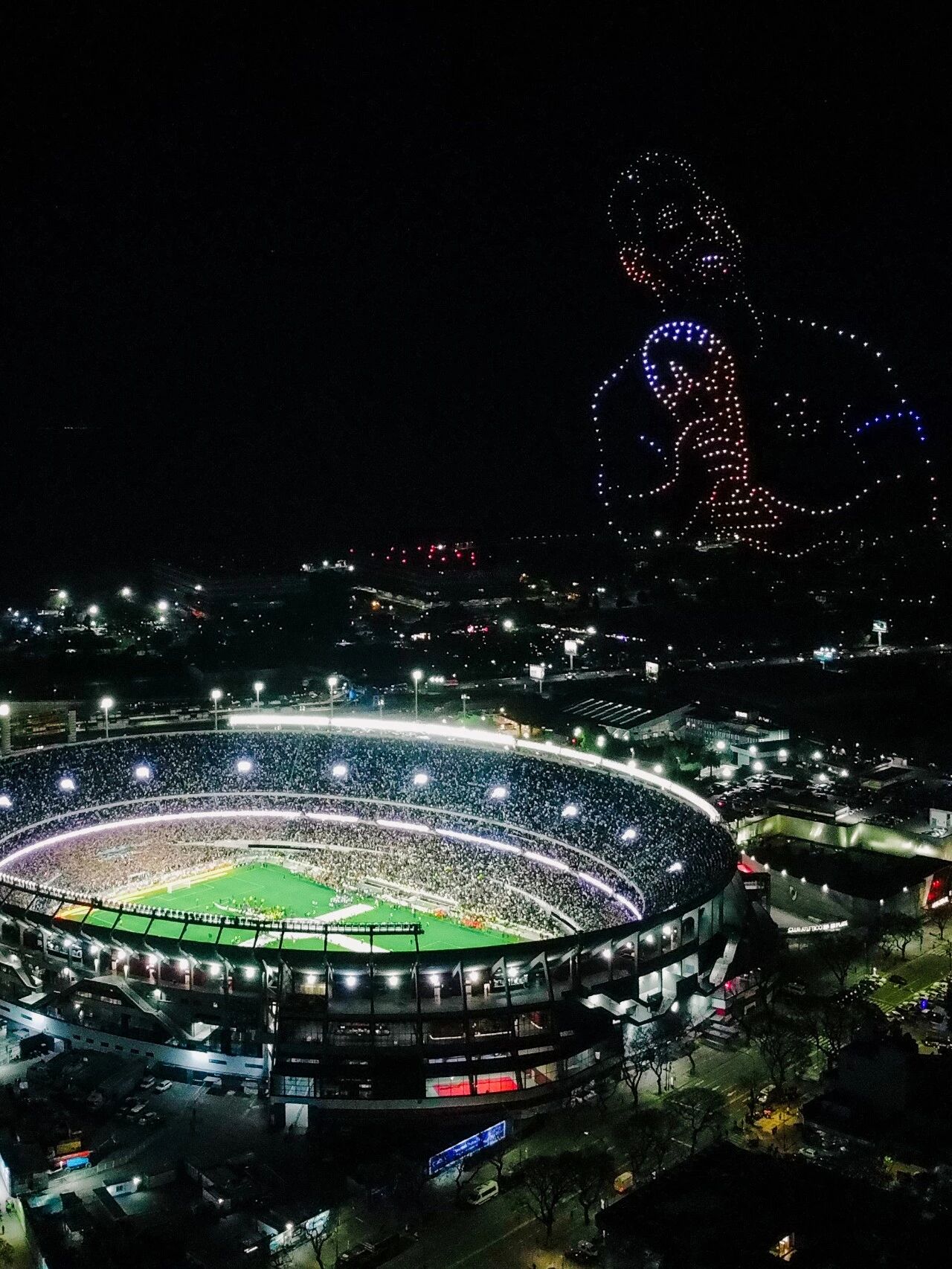
The tribute did not stop at the stadium gates. In Rosario, the city he left as a teenager, a thirty-metre shirt was laid out at the Flag Monument with one word changed: where the name should have been, it read Gracias 10. A helicopter carried a giant shirt over the city in the afternoon, and the federal government and the football association leaned into the whole thing openly, naming the day Gracias, Leo and turning it into a civic event.
The programme started at midday on the university campus and moved to the stadium in the evening. The main stage show was hosted by the former Argentina goalkeeper Sergio Goycochea; inside the Monumental the entertainment began at 17:30 and ran through half-time until around 23:00, with a drone display over the roof and fireworks to close it. Very little of it was left to chance.

The anthem, the tenth minute, and the noise
For the national anthems, the association invited veterans of the 1982 Falklands conflict, and the singer Santana performed. It was a deliberate choice: the last match of the country's most capped player, opened by people whose own service predates his birth by a decade.
Benin, for their part, had travelled for twenty-five hours and were being paid no appearance fee at all. They said publicly that they were honoured to be there anyway, and they behaved like it. Their captain, D'Almeida, had learned enough Spanish to address Messi in his own language at the coin toss, and handed over a commemorative statue and a shirt the squad had prepared in advance.
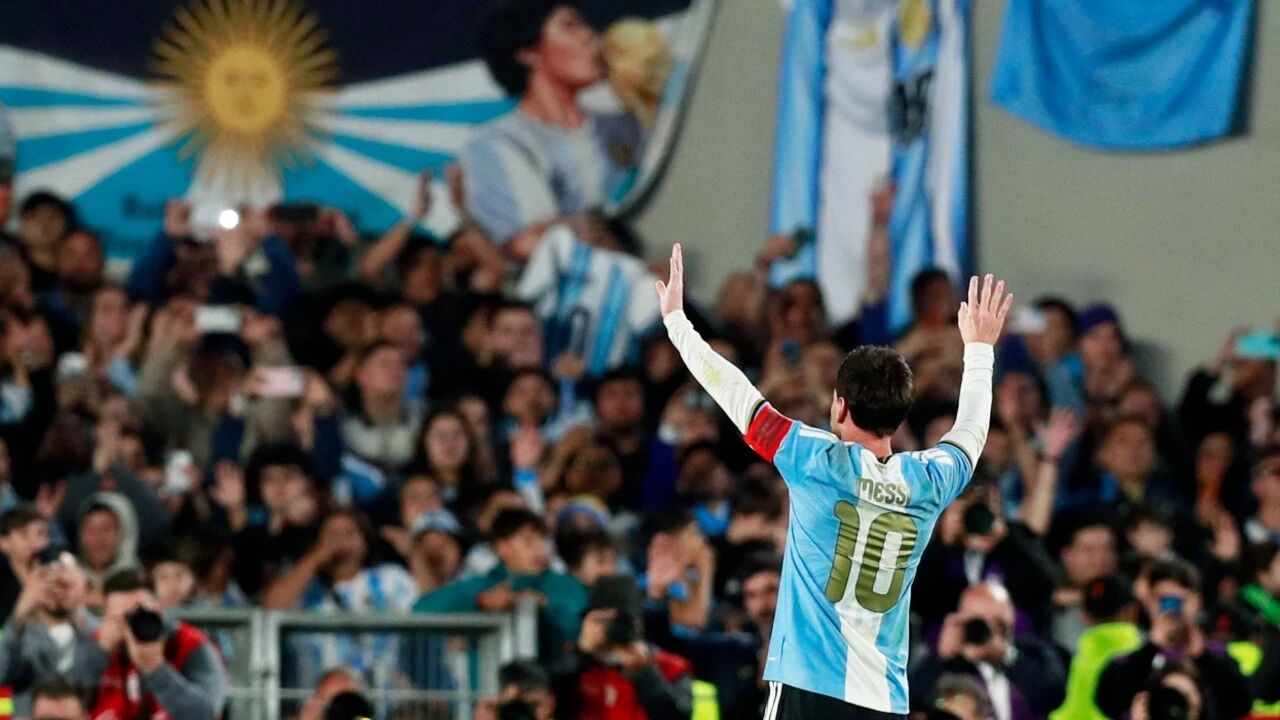
Then came the tenth minute. The entire stadium stood, applauded and chanted his name, the fireworks went up behind the stand, and the referee stopped the match so that nobody had to watch it through the noise. Messi stood in the middle of it and applauded back. In the stands, his wife Antonela and their three children watched the same thing everybody else did.


The last team talk
What the television cameras caught in the tunnel before kick-off was the captain giving his final team talk, and it was about as short as team talks get.
“Focus on the match. Play happy. Enjoy it.”
Messi, in the tunnel, before his last Argentina matchIt is not a bad instruction for a friendly that was never only a friendly. The players took it literally — Argentina spent the first half playing like a team enjoying itself, which is roughly what the crowd had come to see.
Three goals, three different answers
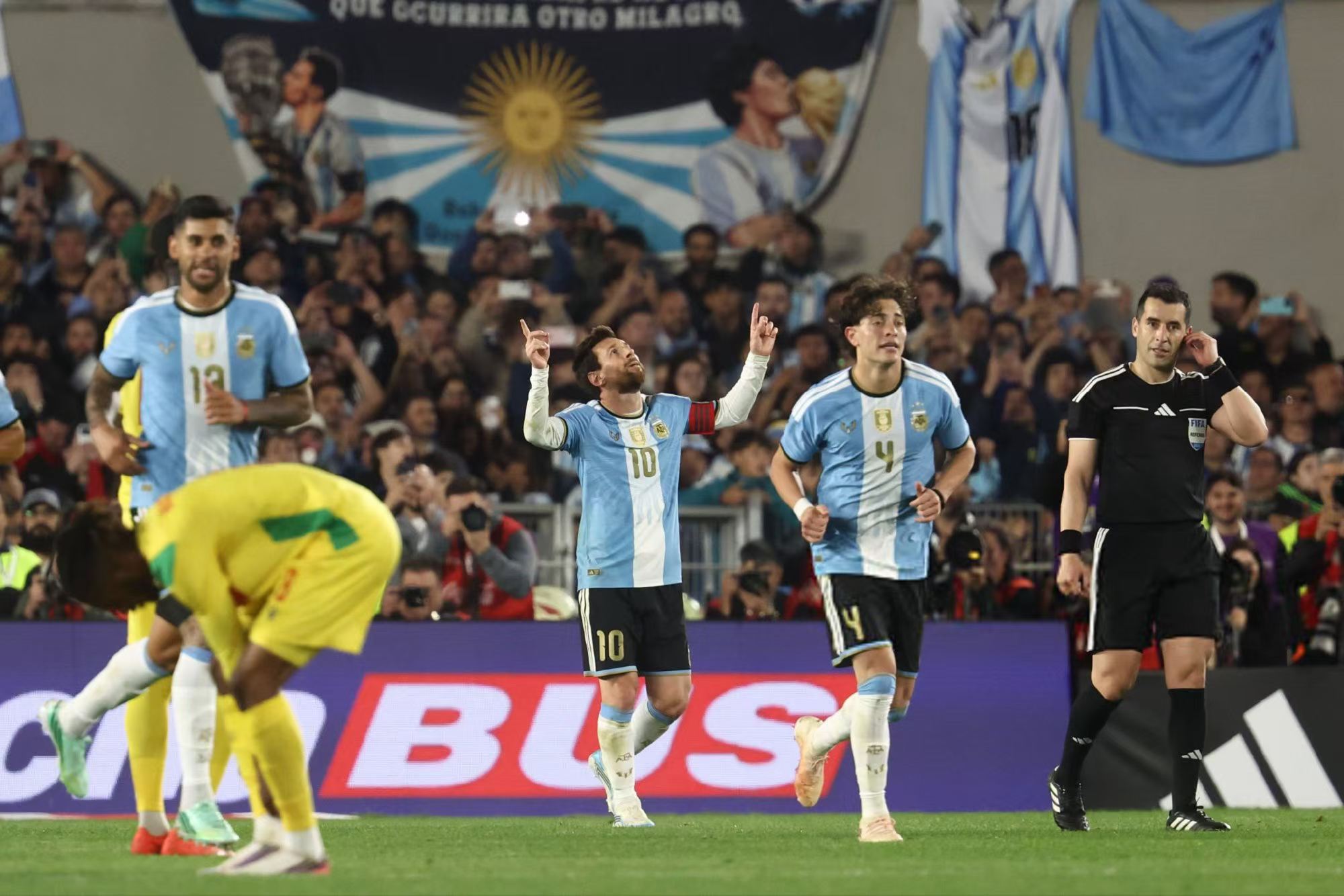
The goals arrived in a pattern that would have been sentimental if it had been scripted, and it was not scripted. At 48 minutes Messi picked out Otamendi for the opening goal. At 61 minutes he did the same for Nico Paz — the player the national setup has settled on as the long-term answer to the No. 10 question. And at 71 minutes he took the penalty himself.
The stadium stands
Eighty-five thousand people applaud and chant his name. Fireworks go up, and the referee stops the game so the moment can be felt rather than watched.
Otamendi opens the scoring
Messi, dropping off the front line, finds him. First assist of the night.
Nico Paz makes it two
The heir to the shirt scores from the man currently wearing it. Second assist.
Messi, from the spot
Appearance, assist and goal in his final match. The full set, completed on the way out.
3-0, and then the photographs
Players from both sides queue up for pictures. The referee hands him the cards as a keepsake. He leaves with the match ball.

The one part of the night that did not land
The complaint in the Argentine press afterwards was not about the result, or the ceremony, or the crowd. It was about the opposition. Benin are not an elite side, and the association had not seriously explored the alternative that most farewells of this size reach for — a world select, or a European heavyweight, or anyone who would have made the match itself a contest.
Olé made the argument bluntly: the October window could have carried several international dates, the Monumental would have sold out for every one of them, and a federation with its own problems to solve had the capacity to stage exactly one match. So the send-off was as large as the country could make it and smaller than the career deserved. It was also, for everyone inside the ground, more than enough.
The record he walks away with
He finishes as Argentina's record holder for appearances, goals and assists, and in each case he is a long way clear of the next name on the list. The 126 goals are the more remarkable of the three, because he was never a centre-forward: for most of those twenty-one years he was the player the centre-forward was playing off.
| Argentina appearances | 208 — national record |
| Argentina goals | 126 — national record |
| Argentina assists | 68 — national record |
| Senior international career | 2005 – 6 October 2026 |
| Major titles | Copa América 2021 and 2024, the 2022 Finalissima and the 2022 World Cup |
| Wait ended | A 28-year run without a senior title, closed in 2021 |
| Last match | Argentina 3-0 Benin, Estadio Monumental |
The other half of the legacy does not show up in a record book. Argentina's following used to be a South American story with a large diaspora; it is now a global one. That reach, and the commercial weight that comes with it, is the part of the Messi era that the association has the most difficulty replacing.


The size of the space he leaves
The gap did not take months to show. Argentina's next home friendly, against Bolivia, was played without him and filled only about half of the Estadio Kempes. That is the trading position the new Argentina is in, and the association knows it: to cover the commercial shortfall it will take more matches abroad, which is the opposite of what keeps a home crowd close to a team.
The best news is on the bench. Lionel Scaloni has agreed to two more years, and he has been clear that he intends to keep playing the way the two of them built the side to play. He also has his answer to the No. 10 question, and it was on the pitch on Tuesday night: Nico Paz, who scored the second goal from a Messi pass.
He is not alone. Exequiel Palacios (Ipswich) and Marcelo Flores (Boca) have both impressed in the shirt, and Scaloni is still looking at defenders Valentín Vega (Zenit) and Agustín Giay (Palmeiras) and the forward Gianluca Prestianni (Benfica). Argentina will not run out of players.
What it will run out of is attention. Two years from now the Copa América arrives, and it is the first tournament of the post-Messi era that will be judged on its own terms. A transition is coming whether the country wants one or not, and the only route back to the front rank of international football runs through results rather than one man's name.

The shirt he wore, and where to find it
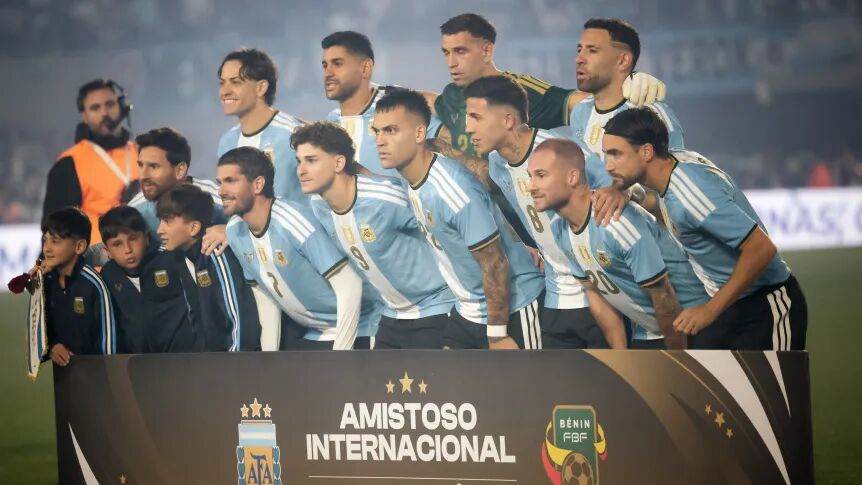
For the night itself, Argentina's kit supplier built a special edition with three things done differently: the name and number printed in gold, the Sun of May stretched out across the body instead of stamped into a corner, and the player's own mark sitting where a performance logo would normally go. It is the shirt he is wearing in the picture above, and the piece most people will actually want afterwards.

The same design is sold in three cuts, and they are priced differently — the youth sizes start lowest. If you would rather not have a name and number on the back at all, or you want your own on it, the blank version is the same shirt with the printing left off.

Questions fans asked after the whistle
Has Messi retired from international football, or was that just his last match? He has retired. The Benin friendly was his final appearance for Argentina; there is no planned return for a tournament.
Who takes the No. 10 now? Nico Paz is the player the setup has settled on, and the symbolism was hard to miss — his goal on Tuesday night was assisted by the man he is replacing.
Was the match competitive? Not really, and that was the main criticism afterwards. Argentina won 3-0 and were never seriously threatened.
Is Scaloni staying? Yes. He has agreed a two-year extension and says he will keep the style he and Messi built the team around.
Can I still buy the farewell shirt? Yes — it remains on sale in men's, women's and youth sizes, and the blank-back version is listed separately.